
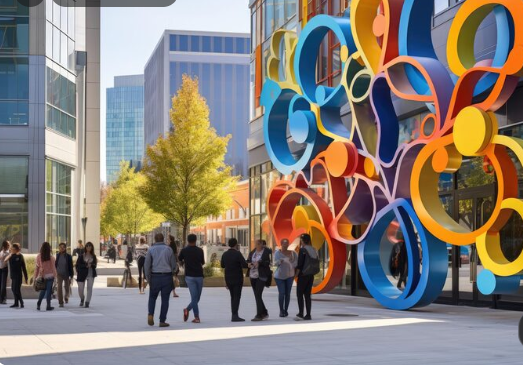
A familiar street can feel entirely different when a blank wall becomes a mural or an overlooked square gains a striking sculpture. People pause, look more closely, and sometimes begin conversations with strangers. A place they once hurried through becomes somewhere worth spending time.
Public art installations bring creative expression into the spaces people share. They include sculptures, murals, light displays, interactive works, and temporary installations. Their value extends beyond decoration: thoughtfully designed public art can help communities express their identity, invite participation, and make urban life more engaging.
Giving Places a Distinctive Identity
Many urban areas share similar features: office buildings, apartment blocks, shopping streets, and transport stations. These serve essential purposes, but they do not always communicate what makes a neighborhood distinctive.
Public art can introduce that missing character. A mural might reflect a community’s migration stories, while a sculpture might draw inspiration from local industry or geography. Artwork can make the history of a place visible within its everyday surroundings.
The strongest projects develop from an understanding of their location. When artists listen to residents and explore local experiences, the resulting work can feel connected to the neighborhood. It becomes a recognizable landmark with meaning for the people who live nearby.
Making Everyday Spaces More Inviting
Urban design shapes how people experience a city. A square with little shade, uncomfortable seating, and no visual interest may attract few visitors, even if its location is convenient.
Art can contribute to a more welcoming environment, especially when integrated with practical improvements. Sculptural seating, artist-designed shelters, and playful pavement patterns combine creative expression with everyday use.
An installation can also give people a reason to stop. Someone may pause to examine a detail, take a photograph, or share the experience with a friend. These small moments add interest to ordinary journeys.
However, artwork alone cannot resolve neglected infrastructure. Its contribution is strongest when supported by accessible paths, good maintenance, comfortable seating, and thoughtful landscape design.
Creating Opportunities for Social Interaction
Public art offers a shared experience without requiring a ticket or formal invitation. People encounter it while walking to work, meeting friends, or visiting a market.
Interactive installations make this participation particularly visible. A work might change as visitors move around it, invite people to contribute messages, or create sounds through touch. These experiences can encourage people to explore together.
Even a traditional sculpture can become a meeting point. Over time, residents may use it as a familiar reference when giving directions or arranging gatherings. In this way, art becomes part of the social life of a place.
Bringing Overlooked Areas Into View
A neglected passageway or an unused building façade can be easy to ignore. Public art can draw attention to these spaces and suggest new possibilities for them.
Temporary installations are particularly useful for experimentation. They allow communities to experience a different use of a location before committing to permanent changes. A modest installation may reveal that people would welcome a gathering area, an outdoor exhibition, or a more pedestrian-friendly street.
Yet increased attention does not automatically benefit everyone. Projects should consider the needs of existing residents and businesses, including concerns about affordability and displacement. Community involvement helps ensure that improvements reflect local priorities.
Making Culture Part of Daily Life
Museums and galleries offer valuable cultural experiences, but visiting them requires time, planning, and sometimes money. Public art introduces creative encounters into everyday routines.
A person who rarely enters a gallery may still develop a connection with a neighborhood mural. Children can encounter different materials, forms, and ideas on their way to school. Visitors can discover stories that conventional signs or buildings might overlook.
Accessibility also matters. Clear pathways, readable interpretation, and opportunities to experience work through different senses can help more people participate.
Opening Conversations About Shared Issues
Art does not always need to be comfortable or immediately understood. Some installations invite reflection on environmental change, historical memory, inequality, or belonging.
A work made from discarded materials may prompt questions about consumption. An installation marking a lost community may encourage people to investigate local history.
These projects work best when there is room for discussion. Public consultation, artist talks, and clear explanations can help residents engage with unfamiliar ideas while allowing different interpretations.
Designing for Lasting Value
Successful public art requires care beyond its unveiling. Materials must suit the location, and maintenance responsibilities should be clear. Communities also need opportunities to influence projects that occupy shared space.
When these foundations are in place, public art can become woven into everyday urban experience. It gives people something to notice, discuss, remember, and share—helping a city’s streets and squares feel more connected to the lives unfolding around them.
Read more: The Growing Influence of Digital Art on Traditional Artistic Techniques