
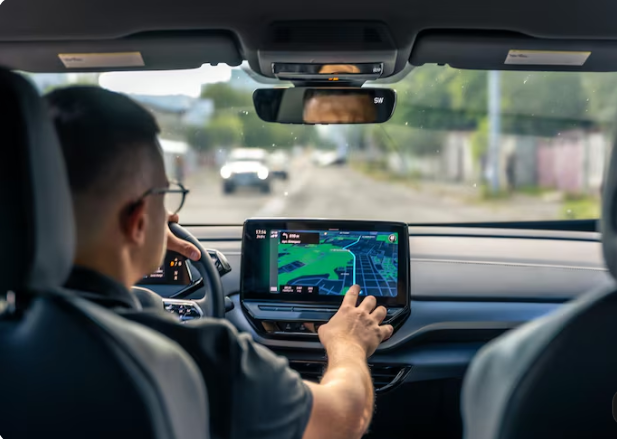
Everyday driving involves much more than steering, accelerating, and braking. Drivers must judge distances, follow directions, watch for hazards, and manage changing road conditions. Even a familiar commute can become demanding when traffic builds or visibility drops.
Smart vehicle technology helps manage some of these challenges. From parking cameras to navigation systems that respond to congestion, connected and automated features can make routine journeys easier. Their greatest value comes when they provide useful assistance while keeping drivers informed and engaged.
Helping Drivers Recognize Potential Hazards
One of the most useful applications of smart vehicle technology is helping drivers notice situations that need attention.
Blind-spot monitoring can warn when another vehicle occupies an area that is difficult to see in the mirrors. Forward-collision warnings can alert drivers to a potential impact ahead. Depending on the system and circumstances, automatic emergency braking may apply the brakes when it detects an imminent collision.
These features provide an additional layer of assistance, but their capabilities have limits. Cameras and sensors can struggle with poor weather, dirt, glare, or unclear road markings. Drivers still need to observe their surroundings and understand the warnings their vehicle provides.
Learning how a system behaves is part of using it effectively. A warning light or sound is most useful when the driver knows what it means and how to respond.
Making Heavy Traffic Less Demanding
Stop-and-go traffic requires repeated adjustments to speed and following distance. Adaptive cruise control can reduce some of that workload by adjusting vehicle speed in response to traffic ahead, within its operating limits.
Some systems also support low-speed stopping and restarting. Lane assistance may provide steering input when the vehicle approaches a lane boundary or help maintain its position within a marked lane.
The level of assistance varies between vehicles. Features that sound similar can behave differently, particularly around stationary traffic, sharp bends, intersections, or faded markings. Drivers should check the vehicle manual and remain ready to take control whenever necessary.
Used appropriately, these tools can make repetitive driving tasks more manageable without removing the need for attention.
Taking Uncertainty Out of Parking
Parking technology offers practical benefits in crowded streets, apartment complexes, and busy shopping areas.
Reversing cameras show areas behind the vehicle, while parking sensors provide warnings as obstacles get closer. Surround-view systems combine several camera feeds to create a view that helps drivers judge the vehicle’s position.
These tools can be particularly helpful when maneuvering a larger car through a narrow space. However, displayed images may distort distance, and sensors may miss certain objects. Direct observation remains essential.
Automated parking features can assist with selected maneuvers, although drivers must understand whether they need to control the brakes, accelerator, or gear selection. Clear feedback makes these systems easier to use confidently.
Improving Navigation and Journey Planning
Connected navigation can help drivers make better decisions before and during a journey. Traffic information, route alternatives, and estimated arrival times allow people to plan around delays.
For example, a driver heading to an appointment may discover congestion before reaching a familiar junction. A suggested alternative can provide another option, though the driver still needs to assess whether the route suits the vehicle and road conditions.
In electric vehicles, navigation may also incorporate charging stops and estimated battery levels. The usefulness of these estimates depends on factors such as driving speed, temperature, terrain, and the accuracy of charging information.
Good navigation supports decisions through clear, timely instructions. Complicated menus and frequent notifications can undermine that benefit by demanding too much attention.
Creating a More Comfortable Driving Environment
Smart technology also improves the smaller details that shape a daily journey.
Automatic climate control can maintain a selected cabin temperature. Saved driver profiles may restore preferred seat and mirror positions when different family members use the same vehicle. Smartphone integration can make familiar navigation and audio functions easier to access.
Voice controls can reduce the need to reach for a screen, although they still require attention. Setting destinations and choosing audio before moving helps keep interaction during the journey brief.
Convenience works best when controls are predictable. Frequently used functions should be easy to find and operate.
Supporting Maintenance and Vehicle Awareness
Vehicle monitoring systems can give drivers useful information about tire pressure, service intervals, and certain mechanical faults. Connected services may also provide maintenance notifications or allow owners to check selected vehicle details remotely.
These reminders can help owners address issues earlier, but a dashboard message cannot identify every problem. Unusual noises, changes in braking, or other unexpected behavior still deserve attention.
Understanding which alerts require immediate action—and which indicate routine maintenance—helps drivers respond appropriately.
Making Technology Work for the Driver
The most valuable smart vehicle features solve familiar problems: difficulty parking, uncertainty about a route, repetitive speed adjustments, or missed maintenance reminders.
Choosing and using them well requires more than looking at a feature list. Drivers benefit from clear demonstrations, time to practice, and a realistic understanding of system limits. As these technologies become part of everyday driving, thoughtful design and informed use help turn technical capability into practical comfort, convenience, and support.
Read more: Why Public Art Installations Are Transforming Modern Urban Spaces
2 comments