
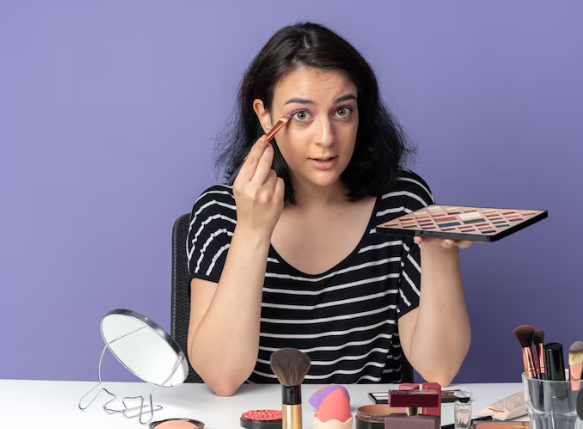
Makeup can look different on your face than it does in a tutorial. Skin texture, lighting, product formulas, and application techniques all influence the result. A foundation that looks smooth on someone else might appear heavy on you, while a flattering blush can become overpowering when applied too generously.
Improving your makeup does not always require buying more products. Small changes in preparation, placement, and blending can make your existing collection easier to use. Understanding a few common mistakes is a useful place to start.
Applying Makeup Before Preparing Your Skin
Foundation can cling to dry patches or settle unevenly when applied without preparation. Too much skincare immediately before makeup can also leave a slippery surface that causes products to move or gather.
Start with clean skin and apply a moisturizer suited to your needs. During the day, apply sunscreen according to its directions before beginning makeup. Give each layer time to settle, particularly if your products tend to pill.
Primer is optional. If you use one, apply a small amount where it serves a purpose, such as an area where makeup regularly wears away.
Choosing Foundation in the Wrong Shade
Testing foundation on the back of your hand can lead to a poor match because your hands and face may differ in color. Store lighting can also make a shade appear more suitable than it really is.
Test a few shades along your jawline and check how they relate to your neck and upper chest. Examine the result in natural light and allow the foundation to dry before deciding.
Pay attention to undertone as well as depth. A shade can be light or dark enough yet still look too pink, yellow, or orange.
Using Too Much Foundation
Applying a thick layer everywhere can make foundation more noticeable around the nose, mouth, and areas with natural texture.
Begin with a small amount and blend outward from the areas that need coverage. Add another thin layer only where necessary. Use a little concealer for individual marks instead of increasing coverage across your entire face.
A brush, sponge, or clean fingertips can all work. The best tool is the one that distributes your chosen formula evenly without leaving obvious edges.
Overloading the Under-Eye Area With Concealer
A large amount of concealer beneath the eyes can gather in fine lines and look heavy. Choosing a shade that is much lighter than your skin may also create a stark contrast.
Apply small dots around the areas of darkness, then blend gently. Check the result before adding more. A concealer close to your foundation shade often looks more natural, while a slightly lighter shade can provide subtle brightness.
For noticeable discoloration, a small amount of an appropriate color corrector may reduce how much concealer you need.
Setting the Entire Face With Heavy Powder
Powder can control shine and help set makeup, but applying too much may emphasize dryness and texture.
Use a light layer where makeup tends to crease or become shiny. For many people, this means focusing on the forehead, nose, and chin rather than covering every area equally.
Before powdering beneath the eyes, gently smooth any concealer that has settled into lines. Press on a small amount of powder and reassess before adding more.
Drawing Brows Too Dark or Too Sharply
A solid block of color can make eyebrows appear heavier than intended, especially at the inner corners.
Brush your brow hairs into place first so you can see the gaps. Fill those spaces with light strokes, following the direction of growth. Keep the front of each brow softer and use a spoolie to blend visible pencil or powder.
Step back from the mirror occasionally. Brows that look perfectly defined up close may appear overly strong from a normal viewing distance.
Neglecting Eyeshadow and Eyeliner Placement
Unblended eyeshadow edges and thick eyeliner can overwhelm an eye look. Copying placement exactly from a tutorial may also produce a different result on your own eye shape.
Build eyeshadow gradually and soften the edges with a clean blending brush. Apply eyeliner in short strokes close to the lashes before deciding whether to make it thicker.
Check your makeup with your eyes open and your face relaxed. This shows how the placement looks during ordinary conversation.
Applying Too Much Blush, Bronzer, or Highlighter
Highly pigmented cheek products can be difficult to soften once applied heavily. Strong shimmer may also draw attention to texture you would prefer to keep subtle.
Pick up a small amount, remove excess from the brush, and build the color gradually. Blend the edges without spreading the product across your entire cheek.
Check cheek makeup from the front and side. This helps reveal stripes, uneven placement, or highlighter that looks more intense as the light changes.
Ignoring Lip Preparation and Product Buildup
Lipstick can catch on loose skin, while thick layers may gather around the edges or inner lip.
Apply a little lip balm during your preparation, then blot away excess before adding color. Avoid picking or aggressively scrubbing flaky lips. Use lip liner lightly if you want more definition, and apply lipstick in thin layers.
Check the corners of your mouth and your teeth before finishing.
Using Dirty Tools and Overlooking Lighting
Product buildup on brushes can make blending less predictable. Clean reusable tools regularly according to their care instructions and allow them to dry fully. Avoid sharing eye and lip products, and follow product storage and replacement guidance.
Finally, check your finished makeup in more than one light source. Natural light can reveal a foundation mismatch or uneven blending that bathroom lighting hides. A brief final check—and a lighter hand during application—can make everyday makeup feel much more manageable.
Read more: How to Build a Personalized Beauty Routine for Different Seasons