
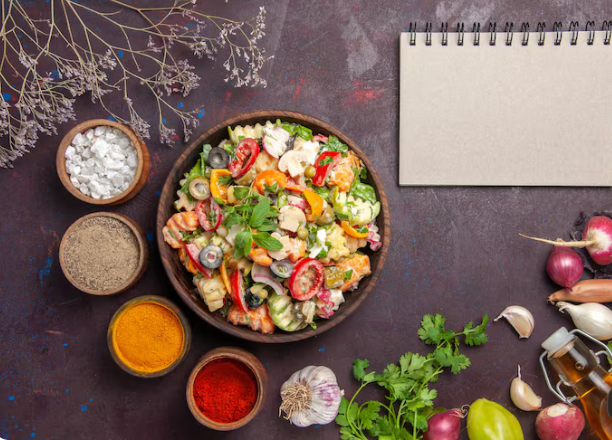
Preparing a balanced meal does not have to involve a long ingredient list or an afternoon in the kitchen. Often, the most useful meals come from combining familiar foods in ways that provide nourishment, variety, and enjoyment.
A bowl of rice with beans and vegetables, a filled sandwich with fruit on the side, or a simple omelette served with toast can all offer a practical starting point. The skill lies in understanding how different ingredients work together, then adapting them to your appetite, preferences, and available time.
Think in Components Instead of Recipes
Recipes can teach valuable techniques, but you do not need detailed instructions for every meal. A flexible approach is to think about the roles different foods play.
Start with a source of protein, add vegetables or fruit, and include a starchy food such as rice, potatoes, bread, or another grain. A little oil, nuts, seeds, or another suitable ingredient can contribute richness and flavor.
For example, cooked lentils, rice, sautéed greens, and a spoonful of yogurt can become a satisfying meal with minimal preparation. The same structure could produce a completely different plate using fish, potatoes, and roasted vegetables.
These components provide direction while leaving room for cultural traditions and individual needs.
Give Each Meal a Useful Starting Point
Choosing one main ingredient can make the rest of the meal easier to assemble. Look at what needs using first or what is already prepared.
If you have cooked chickpeas, you could combine them with chopped tomatoes, cucumber, bread, and a simple dressing. Leftover chicken might become a sandwich filling or accompany rice and vegetables. Eggs can form the basis of a quick meal when other ingredients are limited.
Building around one ingredient reduces the number of decisions you need to make. It also helps prevent food from being forgotten at the back of the refrigerator.
Make Vegetables Easy to Include
Vegetables often become an afterthought when their preparation feels separate from the main meal. Including them in the same pan, bowl, or filling makes the process simpler.
Add peas to rice, stir spinach into lentils, or cook peppers and onions alongside your main ingredient. Raw options such as carrots, tomatoes, and cucumber can provide a convenient side without additional cooking.
Fresh produce is only one option. Frozen vegetables and suitable canned varieties can be useful staples, especially when shopping frequently is difficult.
Variety can develop across several meals. You do not need to include every color or type of vegetable on a single plate.
Use Protein Ingredients That Suit Your Routine
Protein foods can be simple and affordable. Beans, lentils, eggs, tofu, fish, poultry, yogurt, and other options can fit into meals according to your preferences.
Consider preparation time when choosing them. Canned beans can be rinsed and added to a bowl, while cooked lentils can form the base of a soup or filling. Eggs offer several quick possibilities, from scrambled eggs to an omelette with vegetables.
Combining ingredients can also add interest. A lentil dish topped with yogurt or a grain bowl containing beans and seeds offers contrasting textures as well as different flavors.
The most practical choice is one you enjoy and can prepare consistently.
Let Staple Foods Provide Flexibility
Rice, bread, pasta, oats, potatoes, and other staples make it easier to turn a few ingredients into a complete meal. Keep several options available so you can choose according to time and appetite.
A baked potato can hold beans and vegetables. Pasta can carry a simple tomato sauce with lentils or another protein ingredient. Bread can become a sandwich, an accompaniment to soup, or toast topped with eggs.
Whole-grain options can add variety and texture, but meals do not need to follow an all-or-nothing approach. Familiar staples can remain part of a balanced eating pattern.
Build Flavor with a Few Reliable Combinations
Simple food becomes more enjoyable when flavor receives attention. You can create a dependable combination using herbs or spices, an acidic ingredient, and a little richness.
Lemon juice and olive oil can brighten a bean salad. Ginger, garlic, and spices can bring depth to vegetables and lentils. Yogurt mixed with herbs can serve as a dressing, dip, or topping.
Texture matters too. Crisp cucumber, toasted seeds, or chopped nuts can make a soft rice or lentil dish more interesting.
Taste as you cook and adjust gradually. Learning how a small addition changes a dish is often more useful than memorizing an elaborate recipe.
Prepare Ingredients That Can Serve Several Meals
A little preparation can reduce daily effort without requiring an entire week of identical meals. Cook a versatile base, prepare a few vegetables, or mix a dressing that suits several dishes.
For example, roasted vegetables could accompany dinner, fill a wrap the next day, and later become part of a grain bowl. A pot of lentils might be served thick with rice for one meal and loosened into soup for another.
Store prepared foods appropriately and use them within suitable food-safety limits. Plan realistic quantities so that preparation saves work rather than creating waste.
Allow Meals to Be Different
Balance does not require every meal to look the same. Breakfast may be oats with yogurt and fruit, while lunch could be a sandwich with vegetables. Dinner might be a one-pot dish containing several components together.
Appetite, activity, dietary requirements, and personal circumstances also affect what feels appropriate. A general meal structure is a starting point that can be adjusted.
Creating balanced meals becomes easier with repetition. A few dependable ingredients, basic cooking methods, and familiar flavor combinations can provide plenty of choice. Over time, assembling a meal becomes less about following instructions and more about understanding what you have and how to make it work together.
Read more: The Future of Sustainable Transportation and Energy-Efficient Vehicles
1 comment