
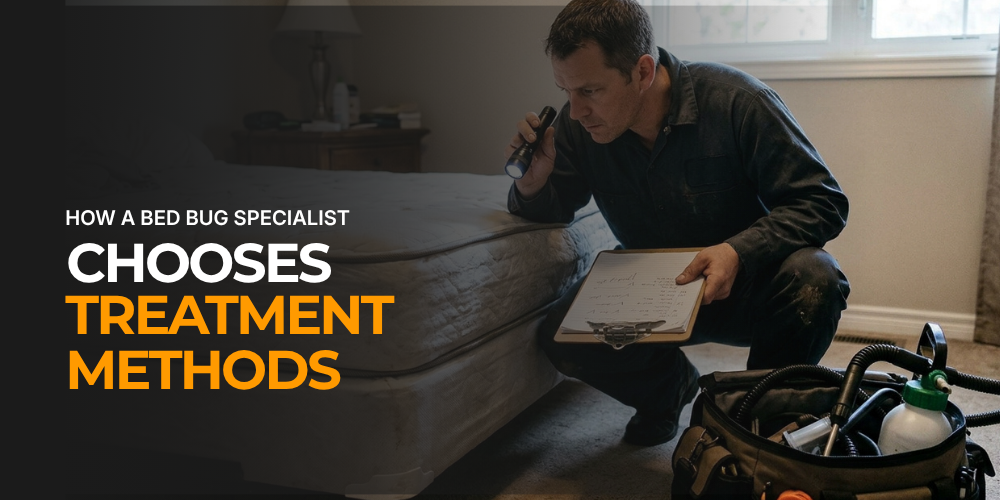
Finding bed bugs can leave you wondering which treatment will work for your property and why. A bed bug specialist answers those questions by checking where bugs hide, how far activity extends, and what could prevent treatment from reaching them. In turn, those findings guide the choice of equipment, products, and treatment areas.
Because each property has different conditions, a residential and commercial bed bug specialist compares treatment methods before recommending a plan. Customized bed bug treatment also accounts for your preparation needs and access to affected rooms. As a result, you can understand how each step supports the overall approach.
How a Bed Bug Specialist Assesses Infestations
Before any treatment is chosen, the bed bug specialist needs to know where the bugs are. To choose bed bug treatment methods and develop customized treatment, they inspect the following:
- Beds and furniture: The specialist checks mattress seams, bed frames, and upholstered seating for bugs, eggs, and other evidence. These findings help identify which belongings need attention and closer inspection.
- Cracks and edges: They also examine baseboards, furniture joints, and gaps near resting areas. Because bugs can hide beyond the bed, these checks help determine how far treatment should extend.
- Nearby rooms: In shared buildings, the specialist checks neighboring rooms or units for activity. This helps them identify additional areas that could undermine treatment if overlooked.
Additionally, your provider asks which products you used, where you applied them, and when you last saw bugs. This history helps them assess earlier bed bug treatment methods. For example, customized bed bug treatment may need to cover rooms or furniture that previous efforts missed.
Property Conditions That Influence Treatment Choices
Your bed bug specialist also reviews conditions that could limit access to treatment or coverage. Before recommending bed bug treatment methods, they assess the following:
- Room layout: Furniture placement affects how technicians reach hiding places and position equipment. Therefore, your provider identifies areas you need to clear before work begins.
- Sensitive belongings: Some items cannot tolerate treatment temperatures. For that reason, your provider explains how customized bed bug treatment will handle them, including separate treatment when appropriate.
- Clutter: Stored belongings and piles of clothing create hiding places and restrict airflow. Consequently, your provider explains how to organize the space without spreading bugs elsewhere.
Meanwhile, customized bed bug treatment should address your needs while maintaining treatment requirements. Discuss the following:
- Preparation assistance: Explain whether you need help preparing affected rooms.
- Room access and scheduling: Coordinate access with occupants and discuss business hours.
- Treatment time and coverage: Bed bug treatment methods require adequate exposure time and coverage, which a shorter appointment cannot replace.
How a Bed Bug Specialist Compares Methods
Once the specialist understands the infestation and the property, they start comparing bed bug treatment methods. Depending on those findings, customized bed bug treatment may include the following:
- Professional heat: Heat can treat a larger area when the space and its contents are suitable for the process. However, technicians must monitor temperatures and exposure time at potential hiding places.
- Localized steam treatments: Steam can target suitable seams, furniture surfaces, and cracks. Because it requires access to the treatment site, the specialist considers whether it can reach the affected material.
- Targeted pesticides: The specialist selects products labeled for bed bugs and the intended application sites. They also check instructions about preparation, application, and when people can return.
A residential and commercial bed bug specialist follows label directions and considers prior pesticide use and potential resistance when selecting bed bug treatment methods. Customized bed bug treatment may combine chemical and nonchemical approaches to reduce reliance on a single product.
Building and Adjusting the Treatment Plan
Once your bed bug specialist chooses an approach, they explain how the work will proceed. To put customized bed bug treatment into practice, they outline the following:
- Treatment coverage: The plan identifies the rooms and belongings that need attention. You can then confirm access and raise concerns about items that require special handling.
- Preparation steps: Your provider explains how to handle laundry, clear the work area, and contain affected belongings. Following these instructions helps prevent you from carrying bugs into other rooms.
- Scheduling and responsibilities: You learn who completes each task and when rooms must remain empty. Your provider also explains return instructions and the timing of follow-up checks.
Afterward, inspections and monitoring help the specialist determine whether the selected bed bug treatment methods were effective. If bugs remain, they review the location and timing of activity before deciding what to change. Therefore, customized bed bug treatment can adapt to further findings. Recording sightings gives your provider useful information between visits.
Turn Findings Into Action
The way a bed bug specialist chooses treatment is not random. Infestation findings, property conditions, past product use, and method limits all guide which bed bug treatment methods they recommend. A strong plan usually becomes a customized bed bug treatment that fits your rooms, your belongings, and your daily use of the space.
Once you understand the approach, you can complete the preparation, grant access, and follow the monitoring plan with confidence. If you suspect an infestation, reach out to a residential and commercial bed bug specialist, schedule an inspection, and talk through treatment options that make sense for your property.
Read more: Season-Based Vehicle Detailing Guide: What to Clean, Protect, and Inspect All Year