
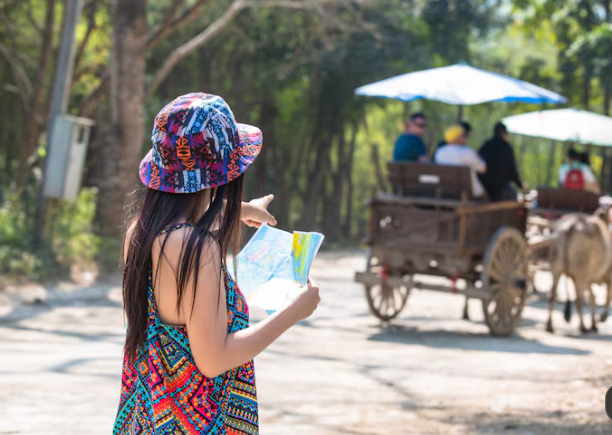
A destination offers more than its landmarks and scenery. Its character also comes from the languages people speak, the meals they prepare, the stories they share, and the routines that shape daily life. Cultural tourism invites travelers to explore these connections and understand a place through the people who call it home.
This approach can include museums, architecture, festivals, food, performing arts, and traditional crafts. It also involves listening carefully and recognizing that a community’s culture is living, varied, and continually changing.
When approached with curiosity and respect, cultural tourism can turn a sightseeing itinerary into a more thoughtful encounter with a destination.
Giving Places a Human Context
A historic building becomes more meaningful when travelers understand who built it, how it was used, and what it represents to people today.
A former trading district, for example, may reveal connections between migration, commerce, architecture, and local food. A public square might serve as both a visitor attraction and a gathering place with personal significance for residents.
Guided walks, museum interpretation, and conversations with knowledgeable local hosts can provide this context. They help travelers connect individual sights with the wider history of a place.
Different accounts may emphasize different experiences. Listening to several perspectives allows a richer understanding than expecting one story to explain an entire community.
Creating Opportunities for Personal Connection
Travel often becomes memorable through an exchange with another person. A craftsperson explaining a technique or a guide sharing the history of their neighborhood can bring detail and personality to an experience.
Participatory activities offer opportunities for these exchanges. A cooking class, language lesson, or workshop can create space for questions while giving travelers a practical introduction to local knowledge.
Such encounters should respect the host’s boundaries. Residents are not automatically available to explain their lives, and friendliness does not imply permission to photograph or record them.
Meaningful connection grows through mutual willingness, fair payment where appropriate, and genuine attention to what someone chooses to share.
Exploring Culture Through Food
Food provides an accessible starting point for learning about a destination. Ingredients and cooking methods can reveal relationships with climate, agriculture, trade, migration, and family traditions.
Visiting a market may introduce unfamiliar produce and seasonal specialties. A locally led food tour can explain how a dish developed or why it appears during particular celebrations.
There is rarely one version of a cuisine. Recipes differ between regions, households, and generations. Contemporary adaptations are also part of a place’s food culture.
Approaching a meal with questions about its ingredients and preparation can make the experience more rewarding than treating it solely as something to photograph.
Understanding Traditions Through Participation
Watching a performance or observing a craft can be engaging, but appropriate participation may reveal how much knowledge and practice an activity requires.
Trying a weaving technique, learning a musical rhythm, or preparing a dish can draw attention to details that are easy to miss as a spectator.
Participation must remain guided by the people responsible for the practice. Some activities are open to visitors, while others have religious, ceremonial, or community restrictions.
Ask what is appropriate, follow instructions, and accept limits without expecting special access. Respectful observation can be meaningful in its own right.
Recognizing Culture as Part of Modern Life
Cultural tourism can become limiting when it presents a destination only through its past. Communities also express themselves through contemporary art, design, literature, music, and everyday social life.
A small gallery, independent bookshop, or neighborhood performance venue may reveal concerns and ideas that historic attractions do not address.
Exploring both heritage and contemporary expression helps travelers avoid viewing culture as fixed. It also makes room for differences within a community, including contrasting experiences across generations and social groups.
Making Thoughtful Spending Choices
Travelers can consider who provides an experience and who receives the payment. Locally owned accommodation, community-led tours, and purchases directly from makers offer ways to direct spending toward participating residents and businesses.
Ask who runs an activity, how contributors are compensated, and whether objects are locally made. Clear answers provide a better basis for choosing than promotional claims alone.
Buying fewer, carefully selected items can also create a stronger connection with what you take home, especially when you understand how and by whom it was made.
Leaving Room for Learning
A tightly packed itinerary can make every stop feel hurried. Allowing time for a conversation, a longer museum visit, or an unplanned discovery gives cultural experiences room to develop.
Learn a few useful local phrases, check visitor etiquette, and remain open to correcting assumptions. Afterward, reflect on what surprised you and whose perspectives you encountered.
Cultural tourism becomes meaningful through the quality of attention travelers bring to it. Landmarks provide an introduction; listening, learning, and respectful participation help reveal the human experiences that give those places their significance.
Read more: The Influence of Cultural Traditions on Contemporary Fashion Trends