
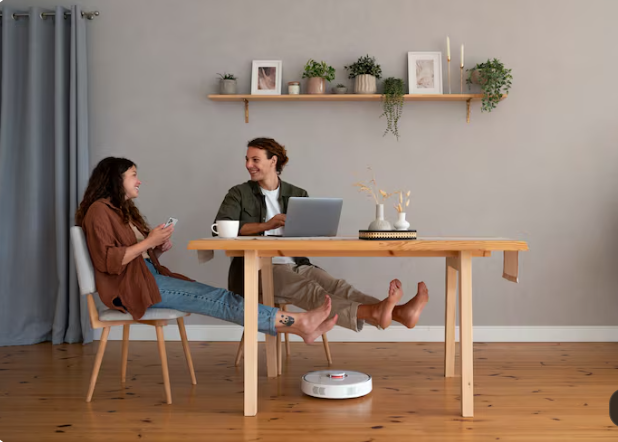
A connected home can do more than respond to commands. It can bring lighting, heating, appliances, and other systems into a coordinated routine that reflects how people use their space. The appeal lies in everyday convenience: fewer repeated adjustments, clearer information, and easier control.
The future of connected living will depend on how well these systems work together. Adding more devices does not automatically make a home more useful. Meaningful progress involves reliable operation, understandable settings, and technology that adapts to household needs without demanding constant attention.
Moving From Individual Gadgets to Coordinated Systems
An individual smart device usually performs a limited task. A connected light can be dimmed remotely, while a thermostat can follow a schedule. Their usefulness grows when several devices support the same activity.
For example, a bedtime routine could lower selected lights, adjust the temperature, and switch off entertainment equipment. A departure routine might turn off unnecessary appliances while leaving essential systems running.
These arrangements work best when they remain predictable. Household members should understand what triggers a routine and how to interrupt it. A complicated sequence that behaves unexpectedly can create more work than it saves.
Making Automation More Responsive
Basic automation follows fixed instructions, such as switching a light on at a particular time. More responsive systems can consider conditions such as occupancy, daylight, or room temperature.
This creates opportunities for settings that better match actual use. Lighting could respond to the amount of natural light available, while ventilation could operate according to monitored conditions.
However, sensor readings and inferred preferences are imperfect. A motion sensor may fail to recognize someone sitting still, and a household’s routine may change without warning.
Future systems will be more useful when they explain their actions, allow adjustments, and provide simple manual overrides.
Supporting Better Energy Management
Connected devices can help households understand when and where energy is being used. Monitoring tools may reveal equipment operating unnecessarily or schedules that no longer match daily routines.
Controls can then support practical changes, such as reducing heating in unused spaces or avoiding unnecessary lighting.
Savings depend on the building, equipment, climate, and occupant behavior. Connectivity alone does not guarantee lower consumption. A well-configured system should help people make informed adjustments rather than assume that every automated action improves efficiency.
Clear reporting also matters. Useful information explains what changed and helps residents decide whether an adjustment is worthwhile. Households can pair that information with the choice of the best light company for their area, since the rate they pay determines how much each change actually saves.
Improving Accessibility and Everyday Control
Connected living can offer several ways to operate the same equipment. Physical switches, voice commands, mobile controls, and automated routines may each suit different users or situations.
Someone with limited mobility might value controlling curtains from a seated position. Another person may prefer a clearly labeled wall control over navigating an app.
Accessible design requires choice. Important functions should remain easy to find, and household members should not need to learn a complicated interface for routine tasks.
Guests, children, and people who do not own the main account also need appropriate ways to use the home. Technology becomes more inclusive when it supports these ordinary circumstances.
Helping Devices Work Together
Compatibility is central to a connected environment. Products may use different communication methods, require separate accounts, or offer only partial integration.
Before adding equipment, households need to understand which functions work across systems and which remain tied to a particular service. A device’s basic operation may be available in one interface while advanced features require another.
A more coherent future would make these relationships easier to understand. Setup processes, compatibility information, and controls should communicate limitations clearly.
Long-term support is equally important. Buyers need a reasonable understanding of updates, replacement options, and what happens if an associated service becomes unavailable.
Making Privacy a Practical Part of Design
Connected devices may collect information about routines, occupancy, voices, or activity within a home. Residents need clear choices about what is collected and how it is used.
Useful privacy controls should be understandable without extensive technical knowledge. People should be able to review permissions, disable unnecessary features, and remove access when someone leaves the household.
Different devices deserve different levels of scrutiny. A camera or microphone introduces considerations beyond those of a simple lighting controller.
Thoughtful design makes these distinctions visible so residents can choose functions that fit their comfort and needs.
Keeping Homes Functional During Disruptions
A living environment still needs to work when an internet connection fails or a phone is unavailable. Essential controls should have suitable fallback options.
Local operation, physical controls, and clear recovery procedures can help maintain everyday usability. Systems should also handle interruptions without unexpectedly changing important settings.
Reliability includes maintenance. Replacing batteries, updating software, and transferring ownership should be straightforward enough for ordinary household use.
Building Connected Spaces Around People
The most useful connected environments begin with a specific need: easier lighting control, clearer energy information, or a more accessible room.
Starting with one purpose makes it easier to judge whether a device improves daily life. Additional functions can follow when they offer a clear benefit.
The future of smart living will be shaped by systems that earn their place through dependable service. When devices coordinate effectively, preserve understandable controls, and accommodate different users, connected technology can become a practical part of a comfortable home.
Read more: Why Maintaining a Healthy Work-Life Balance Matters More Than Ever