
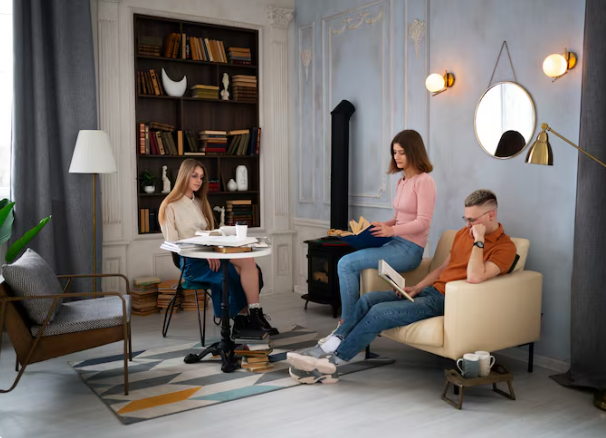
A small room can feel comfortable, inviting, and easy to use when its design suits the space. The challenge often comes from furniture placement, crowded surfaces, or lighting that leaves parts of the room in shadow.
Creating a more spacious feeling starts with understanding how the room functions. Where do you walk? What needs to be stored? Which pieces of furniture get used every day? Answering these questions helps you make changes that improve both appearance and practicality.
Arrange Furniture Around Clear Pathways
A room feels easier to navigate when furniture allows a straightforward route between doors, seating, and other frequently used areas.
Before buying anything, measure the room and mark door openings, windows, sockets, and fixed features. Check how far drawers and cupboard doors extend when open. A piece may fit against a wall yet leave too little space for everyday movement.
Avoid assuming that every item must sit against the perimeter. In some layouts, moving a chair slightly away from a corner creates a more comfortable arrangement. Test different positions using existing furniture before committing to a new layout.
Choose Furniture With Suitable Proportions
Filling a small room with many tiny pieces can make it feel fragmented. A few carefully chosen items may create a calmer, more coherent arrangement.
Look at depth as well as width. A shallow console might provide a useful surface without projecting far into the room. A compact sofa with slim arms can offer seating while leaving more space around it.
Furniture with visible legs exposes more floor beneath it, creating a lighter appearance. However, balance this with storage needs: an enclosed cabinet may be more useful where it keeps everyday belongings organized.
Use a Cohesive Color Palette
A limited palette can help walls, furniture, and textiles feel connected. Light shades such as warm white, pale gray, muted green, or soft beige offer a gentle backdrop, particularly when the room receives natural light.
Choose colors in the room itself. A shade that looks bright in a shop may appear dull or overly cool beside your flooring and furnishings.
Darker colors can also suit small rooms, especially when you want a cozy atmosphere. Keep transitions deliberate and consider using similar tones across adjoining surfaces to reduce visual interruption.
Introduce variety through texture, artwork, and a few accents rather than adding a different color to every element.
Make Windows Feel Open
Bulky furniture and heavy window coverings can make a window feel smaller than it is. Keep the area around it reasonably clear and choose curtains or blinds that suit your privacy needs.
Where wall space allows, extend a curtain pole beyond the window frame so the fabric can sit largely beside the glass when open. Hanging curtains higher can also emphasize the room’s vertical proportions.
Check the finished length carefully. Excess fabric gathered on the floor may interfere with movement in a compact room. A neat finish often feels more intentional.
Layer Lighting Across the Room
A single ceiling light may leave corners dim and create an uneven atmosphere. Combine general lighting with lamps or wall lights where you read, work, or relax.
Wall-mounted lights can free bedside tables or desks, while a well-positioned floor lamp may illuminate a corner without requiring another piece of furniture.
Consider how the room looks in the evening as well as during the day. Position lights so that useful areas remain visible without glare, and plan cables to keep walkways clear.
Place Mirrors With a Purpose
A mirror can reflect light and extend a view, helping a room feel more open. Its effect depends on what it reflects.
Before fixing one in place, check the reflection from the doorway and main seating positions. A view of a window, artwork, or an orderly part of the room may be more appealing than a reflection of crowded shelves.
Choose a scale that works with the wall and nearby furniture. Secure larger mirrors appropriately, particularly in homes with children or pets.
Build Storage Around Daily Habits
Storage is most useful when it matches the belongings you need to keep. Identify what currently collects on chairs, floors, and tables, then give those items an accessible home.
Consider under-bed drawers, a storage bench, shallow cupboards, or shelving fitted into an awkward recess. Use vertical space where practical, keeping frequently used items within comfortable reach.
A combination of closed cupboards and open shelves allows you to conceal everyday supplies while displaying a few personal objects. Leave some shelf space unfilled to prevent the arrangement from feeling crowded.
Keep Decoration Focused
A small room still deserves personality. Select pieces that matter to you and give them enough space to be seen.
One larger artwork can create a clear focal point, while a carefully arranged group of smaller pictures can work equally well. Choose a rug that relates to the furniture arrangement and does not obstruct doors or create a trip hazard.
The most effective changes make the room easier to live in. Clear movement, suitable furniture, useful storage, and balanced lighting allow a compact space to feel considered and welcoming—without needing additional square footage.
Read more: How Smart Vehicle Technology Is Improving Everyday Driving Experiences