
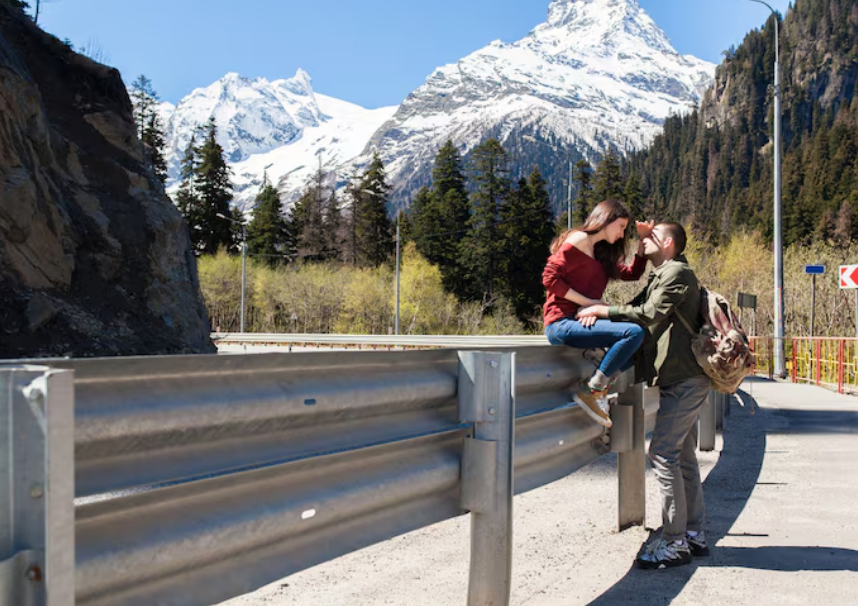
Few places pack as much history, food and scenery into so little space as the South Caucasus. Georgia and Armenia sit side by side and share a land border, and together they make a trip that feels remarkably varied for its size. Within two weeks you can wander through Tbilisi’s old streets, taste wine from one of the world’s oldest winemaking traditions, drive up to a mountain church beneath Mount Kazbek, and step inside Armenian monasteries set in dramatic valleys.
This guide explains how a combined trip works, how many days to plan, and what to sort out before you go.
Why Combine Georgia and Armenia?
Each country is rewarding on its own, but they complement each other well. Georgia is known for its wine culture, generous cuisine, the vineyards of Kakheti and the high peaks of the Greater Caucasus. Armenia offers some of the oldest Christian monasteries in the world, the vast Lake Sevan, and a lively, walkable capital in Yerevan.
Because the two are neighbors, you travel overland in one direction without backtracking. The contrast between them also keeps the journey fresh from the first day to the last.
The Route: From Georgia into Armenia
Most itineraries start in Georgia, cross the border, and finish in Yerevan.
Georgia (about 5 days): Begin in the Kakheti wine region, where family cellars and long lunches set the tone. Visit the hilltop town of Sighnaghi, spend time in Tbilisi’s old town and sulphur-bath district, and take the mountain road to Kazbegi.
Armenia (5 to 6 days): Start in the north with the monasteries of Haghpat and Sanahin, continue to Lake Sevan, then reach Yerevan. From the capital, day trips lead to Garni, Geghard, Khor Virap (with its view of Mount Ararat) and Noravank.
How Many Days Do You Need?
10 to 11 days is enough for a good introduction. You see the highlights of both countries with fairly short drives, and you won’t spend every day in the car.
13 days gives you breathing room and a few extra stops, such as Armenia’s Tatev monastery or more time in the wine regions.
17 to 18 days lets you go deeper, with western Georgia (Kutaisi, Svaneti and Martvili Canyon) and more of Armenia’s south. Longer trips also leave room for higher-category hotels and cooking classes.
If you only have a week, it’s usually better to choose one country and enjoy it properly than to rush through both.
Group Tour or Private Trip?
This choice shapes the whole experience, so it’s worth thinking through. If you’d rather not plan every detail yourself, Cascade Travel caucasus tours offer both formats: small group departures capped at 13 travelers, and private trips on your own dates.
Small groups suit solo travelers who want company and couples who prefer the logistics handled for them. Single rooms are usually available for a supplement. A private trip makes more sense if your dates are fixed, you’re traveling with family or friends, or you want a slower pace or extra hiking days. It costs more per person, but you control the route.
Crossing from Georgia to Armenia
The border is the part many travelers worry about, but on a guided trip it’s straightforward. Most routes cross at Sadakhlo and Bagratashen, south of Tbilisi. Your Armenian guide and driver take over at the border, and the drive continues the same day. Longer itineraries that include western Georgia may cross elsewhere, on the way to the city of Gyumri.
Practical Things to Know Before You Go
- Visas: Georgia and Armenia are both visa-free for US, UK, EU and Australian passport holders.
- Time zone: Both countries are on UTC+4 all year, with no daylight saving.
- Plugs: Two-pin European sockets, so bring an adapter if you’re coming from the US, UK or Australia.
- Money: Georgia uses the lari and Armenia the dram. Cards work in the capitals, but carry some cash for villages and small shops.
- Insurance: Get travel insurance that covers medical care, cancellation and lost luggage. If you plan to hike in Kazbegi or Svaneti, check that your policy covers walking at altitude.
- Pace: Sightseeing involves light walking. If you have mobility needs, mention them before booking so the route can be adjusted.
When to Go
Spring (April to June): Green valleys, wildflowers and mild weather, with fewer visitors than in summer.
Summer (July to August): The best months for the mountains of Svaneti and Kazbegi. Tbilisi and Yerevan get hot, so city sightseeing starts early.
Autumn (September to October): Harvest season in Kakheti and Armenia’s wine regions, with cooler days for sightseeing. Many travelers consider this the best time to visit.
Group departures generally don’t run in winter, and some mountain roads close, though private trips can still be arranged.
What to Expect on Price
Georgia and Armenia tours range from roughly €1,300 for a shorter small-group trip to around €4,400 for a longer, higher-category journey. Prices usually cover private transport, local English-speaking guides, hotels with breakfast, entrance fees, family lunches and wine tastings.
International flights, tips, insurance and personal expenses are normally extra, so check each itinerary for exact inclusions before booking. Some operators advertise lower prices, so compare what’s actually included, such as guides, hotel location and group size.
Final Thoughts
Georgia and Armenia are close neighbors but very different in character, and seeing them together is more rewarding than visiting either alone. Choose your season, decide between a group and a private trip, and book early if you’re aiming for the popular autumn harvest months. With a sensible route and enough days, you’ll come home with a clear sense of why this small corner of the world keeps drawing travelers back.
Read more : Practical Travel Planning Strategies for Exploring New Destinations Comfortably