
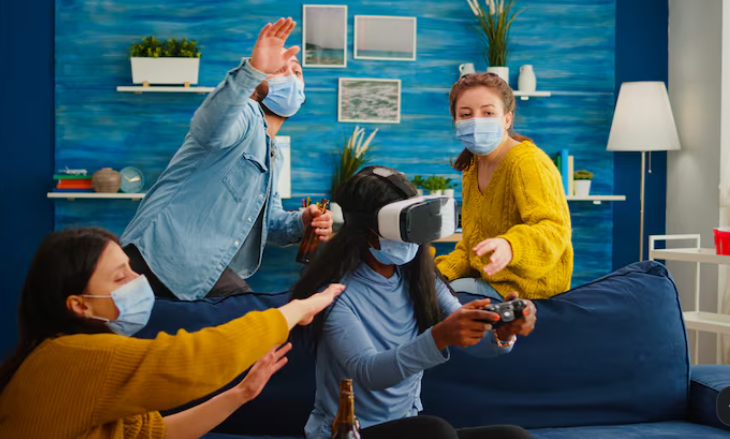
Multiplayer gaming has always given people a reason to interact. Whether two players share a screen or a group meets inside an online world, playing together creates opportunities for competition, cooperation, and conversation.
What has changed is the scale and structure of those interactions. Games have moved from living rooms and local arcades to connected environments where players can maintain friendships across cities and countries. Along the way, multiplayer gaming has become a social activity with its own customs, communities, and challenges.
From Shared Screens to Local Networks
Early multiplayer experiences often depended on physical proximity. Friends gathered around arcade machines, took turns at a computer, or connected additional controllers to a home console.
These settings made interaction immediate. Players could explain a rule, celebrate a victory, or settle a disagreement face to face. Watching someone else play was often part of the experience, especially when equipment limited how many people could participate at once.
Local network gaming expanded the possibilities by connecting several computers in the same location. Players could explore more complex shared environments while preserving the atmosphere of an in-person gathering. Organizing equipment and coordinating sessions became part of the social ritual.
Online Play Expanded the Circle
Internet-connected gaming allowed people to play together without occupying the same room. Friends could continue a shared hobby after moving apart, while strangers could meet through a common interest.
This changed how gaming relationships formed. Instead of depending primarily on geographical proximity, players could connect through preferred game modes, complementary skills, or compatible schedules.
A brief encounter could develop into a recurring partnership. Players who communicated well might arrange another session, join the same group, or gradually become friends. At the same time, online play introduced uncertainty because participants often knew little about the people behind other usernames.
Persistent Worlds Created Lasting Communities
Some multiplayer games offered environments that continued beyond a single match. Characters developed over time, groups pursued long-term objectives, and players returned to familiar locations.
These persistent worlds gave communities a shared history. Completing a difficult challenge, helping a newcomer, or organizing a group event could become a memorable experience that players discussed later.
Guilds, clans, and similar groups also introduced responsibilities. Members might coordinate schedules, distribute tasks, or establish expectations for participation. Such arrangements could create belonging, although demanding schedules sometimes made leisure feel like an obligation.
The quality of the community often depended on how its members balanced achievement with consideration for one another.
Communication Became Part of Gameplay
As multiplayer games grew more complex, communication became increasingly important. Text chat, voice channels, and built-in signals gave players different ways to coordinate.
A successful team might need to share information quickly, explain a plan clearly, or adjust when circumstances change. Cooperative play can create opportunities to practice these skills, though participation alone does not guarantee that players will carry them into other settings.
Communication tools also affect who can participate comfortably. Clear visual signals, adjustable audio, and alternatives to voice chat can help players with different abilities, preferences, and environments work together.
Good game design makes essential information understandable without requiring everyone to communicate in exactly the same way.
Games Became Places to Spend Time Together
Multiplayer interaction does not always revolve around winning. Building a shared space, exploring an environment, or completing routine activities can provide a setting for conversation.
For friends separated by distance, a familiar game can make spending time together easier to organize. The activity offers a shared focus, while conversation develops around it.
Creative modes and player-made activities broaden these possibilities. Participants can collaborate on projects, invent challenges, or show one another something they have built. Their contribution becomes part of what the group enjoys.
However, social meaning varies between players. One person may want conversation and companionship, while another prefers focused competition or quiet participation.
Competition Introduced Social Tensions
Competition can produce excitement and mutual respect, but it can also create friction. Differences in skill, expectations, or commitment may lead to blame and exclusion.
Online environments can make these problems harder to manage when players feel anonymous or encounter one another only briefly. Harassment, discriminatory language, and deliberate disruption can undermine the experience.
Reporting tools, blocking options, moderation, and clear community standards help establish boundaries. Group leaders and ordinary players also influence the atmosphere through the behavior they encourage or challenge.
A welcoming community requires consistent attention, particularly when newcomers are learning unfamiliar rules and social expectations.
Accessibility Shapes Who Gets to Participate
The social opportunities of multiplayer gaming depend partly on practical access. Hardware costs, unreliable connections, language differences, and incompatible platforms can separate people who would otherwise play together.
Cross-platform support can remove some barriers, while thoughtful accessibility settings can make participation more manageable. Flexible session lengths and forgiving cooperative modes may also help groups whose members have different schedules or experience levels.
These choices matter because inclusion involves more than allowing someone to enter a game. Players need a reasonable opportunity to understand, contribute, and feel comfortable returning.
Shared Play and Everyday Relationships
Multiplayer gaming adds another way for people to maintain connections and meet others. Its social value depends on the experience: who participates, how they treat one another, and whether playing fits comfortably alongside other responsibilities.
The evolution from shared screens to connected worlds has greatly expanded the settings in which interaction can happen. Across those changes, the most memorable experiences still often come from familiar human moments—solving a problem together, laughing at an unexpected mistake, or making time for a friend.
Read more: The Growing Importance of Digital Transformation in Modern Business