
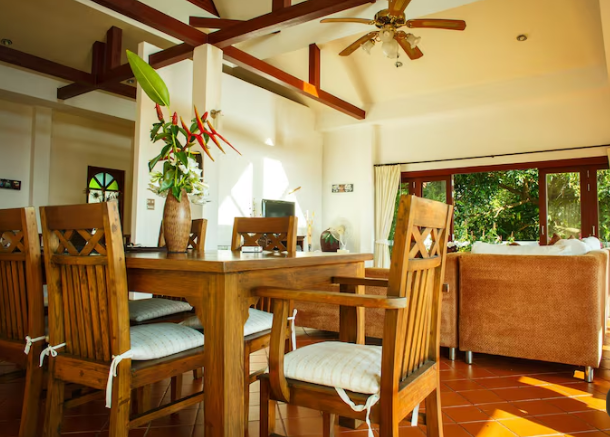
Modern interiors often feature clean lines, open spaces, and restrained color palettes. These qualities can make a home feel calm and organized, but a room with too many smooth, uniform surfaces may lack depth. Natural materials introduce variation that makes these spaces feel more inviting.
The grain of a wooden table, the uneven surface of woven fabric, or the subtle markings in stone can give a room personality without adding clutter. Used thoughtfully, these materials complement modern design while connecting the home to the textures and colors of the outdoors.
Wood Adds Visual Warmth
Wood can soften the appearance of an interior dominated by glass, metal, or painted surfaces. Its grain creates movement, while its color can introduce anything from pale, understated warmth to a rich, dramatic accent.
A wooden dining table can become the focal point of an otherwise simple room. Shelving, cabinet fronts, picture frames, and smaller furniture pieces offer more modest ways to introduce the material.
Different wood tones can work together when there is a clear relationship between them. Repeating a similar undertone or balancing lighter and darker pieces helps the combination feel intentional. Matching every wooden surface exactly is rarely necessary.
Finish matters as much as color. A matte surface emphasizes a different character from a polished one, so consider how the wood will interact with nearby materials and lighting.
Stone Brings Depth and Individuality
Natural stone introduces patterns that are difficult to replicate precisely. Veining, speckling, and tonal variation can give even a simple surface a distinctive presence.
Stone can appear in flooring, worktops, fireplace surrounds, or smaller decorative objects. A large installation may establish the mood of a room, while a stone tray or lamp base can add a quieter point of interest.
The surface finish changes its effect. Polished stone reflects light and can feel formal, while honed or textured finishes create a softer appearance.
Choose stone according to its intended use. Different varieties respond differently to moisture, spills, scratching, and cleaning products. Understanding those characteristics before installation helps ensure the material suits everyday life.
Natural Textiles Soften Clean Lines
Textiles make it possible to add natural texture without changing the structure of a room. Linen curtains, cotton bedding, wool throws, and woven rugs can soften angular furniture and expansive hard surfaces.
Their appeal often lies in small irregularities: a visible weave, a gently creased surface, or variations in the yarn. These details make a restrained interior feel less uniform.
Layering textiles can create depth within a limited palette. A smooth cotton cover, a loosely woven throw, and textured cushions may all share similar colors while contributing different qualities.
Select fabrics for their purpose rather than their label alone. A beautiful textile still needs to suit the household’s cleaning habits, climate, pets, and level of use.
Woven Materials Introduce Lightness
Rattan, cane, and other woven plant materials can bring an airy quality to modern rooms. Their open construction creates patterns of light and shadow, making them useful where solid furniture might feel visually heavy.
A cane-front cabinet, woven chair, or pendant shade can introduce texture while preserving a sense of openness. Baskets can also provide practical storage for blankets, magazines, or everyday items.
Placement deserves attention. Some woven pieces are better suited to sheltered, dry interiors than damp rooms or exposed outdoor areas. Check the construction and care requirements before choosing where to use them.
Earthy Colors Connect Different Elements
Natural materials offer a broad palette beyond beige and brown. Wood may carry golden, reddish, or gray undertones, while stone can contain green, blue, pink, or charcoal markings.
Use these existing colors to guide other choices. A subtle shade in a stone surface might inspire upholstery, while the warmth of wooden flooring can inform the color of curtains or walls.
This creates a connection between materials without requiring everything to look alike. A cool stone surface, warm timber, and soft neutral fabric can form a balanced combination when their proportions feel considered.
Contrast Gives Each Material Presence
Natural materials often become more expressive beside something different. A timber bench stands out against a plain wall, while a woven chair adds detail beside a smooth table.
Balance also involves scale. If flooring already has a strong grain or pattern, quieter furnishings may give it room to stand out. If the larger surfaces are understated, a distinctive wooden cabinet or textured rug can provide character.
Choose one or two prominent features, then let supporting materials reinforce the overall atmosphere. This helps the room feel composed rather than crowded.
Character Develops Through Use
Some natural materials change as they age. Timber may shift in tone, leather may develop a patina, and frequently handled surfaces may show signs of use.
Whether those changes are appealing depends on personal preference and the material’s condition. There is a difference between an attractive sign of age and damage that needs repair.
Consider maintenance before purchasing. Ask about suitable cleaning methods, protective treatments, and repair options. If environmental impact matters to your decision, investigate sourcing and manufacturing too; natural origin alone does not establish that a product is sustainable.
Start with a Few Meaningful Pieces
Introducing natural materials does not require a complete renovation. A wooden side table, linen curtains, a woven basket, or a wool throw can change how an existing room feels.
Begin where you spend the most time and choose pieces that serve a useful purpose. Build gradually, observing how their colors and textures work with the room throughout the day.
The warmth of a home comes partly from these relationships: solid and soft, smooth and textured, familiar and distinctive. Natural materials offer a rich way to develop that balance, giving modern interiors character that feels comfortable to live with.
Read more: Practical Money Management Strategies for Building Long-Term Financial Stability